Comparing estimated vs actual hours shows where a project used more or less time than expected. The useful part is the explanation behind the difference: extra revisions, incomplete inputs, an unfamiliar task or an estimate that missed necessary work.
Track time even when you charge a fixed project fee. It gives the next quote a better starting point and helps you distinguish a pricing problem from a delivery problem.
Estimate by stage before you start
Split a job into a few meaningful stages. For a brochure, these might be preparation, first layout, revisions and final exports. Include coordination if it will take real time.
Record the estimate before production begins. An estimate rewritten after completion does not help you learn. Keep the original figure and note any approved scope changes separately.
You do not need to estimate every small click. Choose stages you can recognise in your working day and repeat across similar projects.
Record the time against the same stages
Use consistent names in your time notes. If you estimate “layout” but record all work as “design”, the comparison will hide what changed.
Short descriptions make the entries useful later. “Updated six product prices following client corrections” explains a revision. “Changes” does not. Record interruptions separately when they are unrelated to the job, rather than inflating production time.
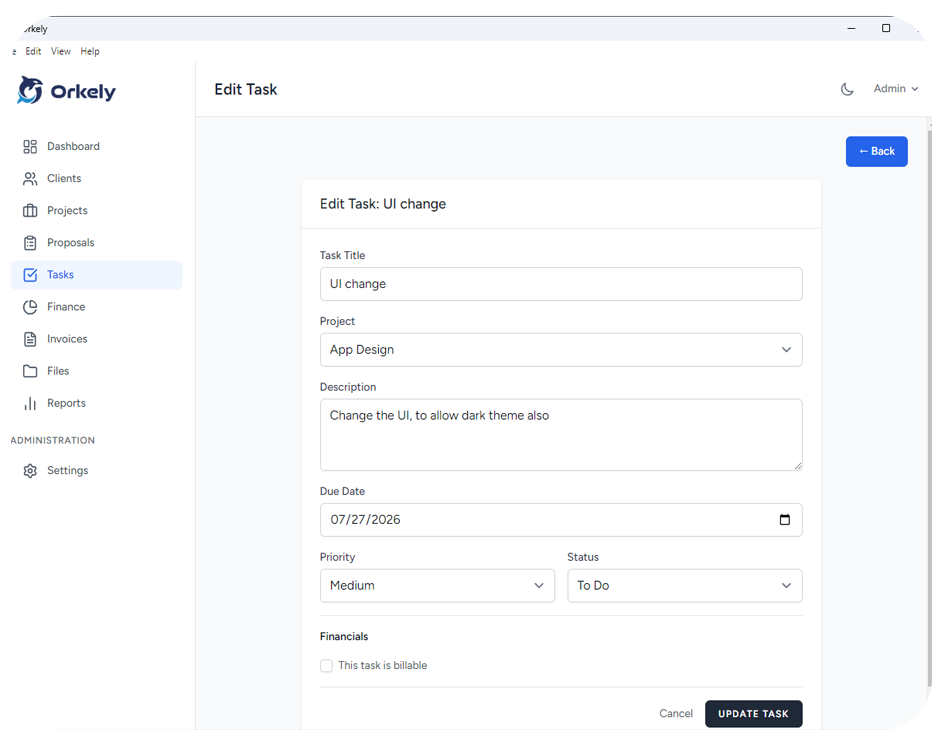
In Orkely, task time logs provide a place to record those hours. The estimate comparison below is a manual review method, not a claim that Orkely automatically calculates estimate variance.
Work through a practical example
A fictional brochure job has this time record:
| Stage | Estimated hours | Actual hours | Difference | | --- | ---: | ---: | ---: | | Preparation | 1 | 1.5 | +0.5 | | Layout | 5 | 5 | 0 | | Revisions | 2 | 4 | +2 | | Exports and checks | 1 | 1 | 0 | | Total | 9 | 11.5 | +2.5 |
The project exceeded its estimate by 2.5 hours. Divide 2.5 by 9 and multiply by 100: actual time was approximately 27.8% above the estimate.
That percentage describes time, not profit. It does not account for the fee, expenses, overhead or taxes.
Investigate the largest difference
Here, revisions explain most of the overrun. Ask what happened before increasing every future estimate. Were the original prices incorrect? Did a second decision maker join late? Did the client request a different direction?
Each answer suggests a different action. Better intake may fix missing information. A consolidated feedback rule may reduce repeated changes. A new creative direction may require a separately agreed scope.
Do not use the review only to criticise yourself. Finishing unfamiliar work can improve later delivery. Record what is repeatable and what was exceptional.
Apply one adjustment to the next quote
Choose a concrete change: allow more preparation, define revision rounds more clearly or separate research from production. Compare the next similar job before treating one result as a permanent rule.
Should I bill every hour I record?
No. A time log records effort. What you bill follows the agreement with the client. Keep the two concepts distinct.
How much history do I need?
Start with the current job. A few comparable projects will be more useful than a large collection of inconsistent entries.
See the task recording example on the Orkely help page, then review one completed project while the details are still fresh.