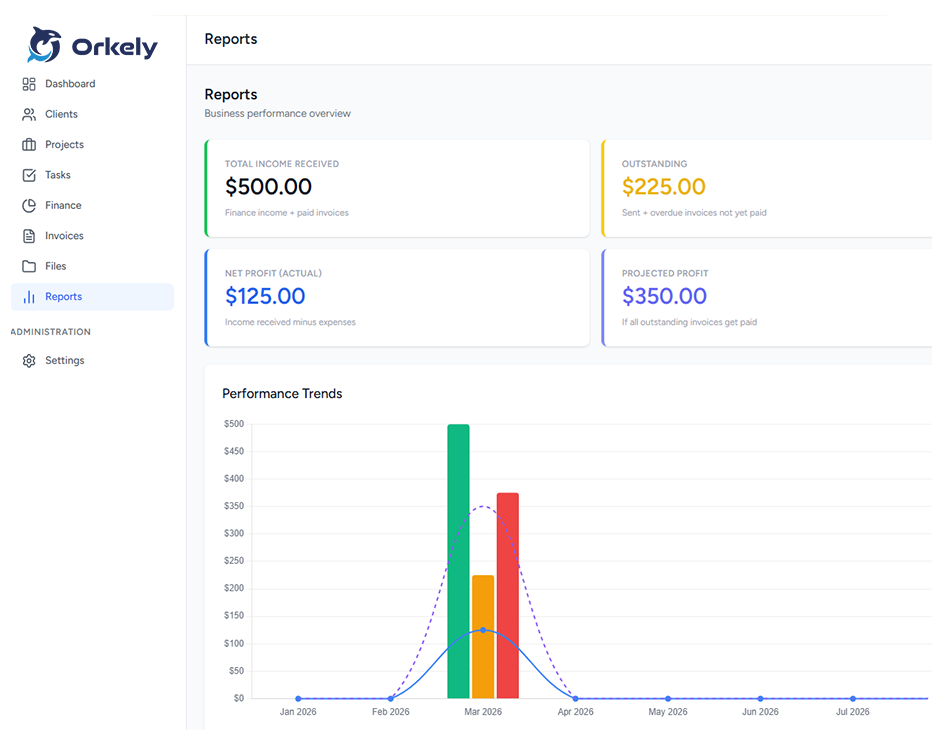
A weekly business admin checklist gives you a regular point to reconcile what happened with what your records say. Review commitments, unfinished work, billing and the next actions that could otherwise disappear between client messages.
Choose a recurring slot you can protect. Thirty minutes can be a useful initial time box, but the right duration depends on your workload. The purpose is a complete review, not finishing an arbitrary timer.
Begin with commitments
Check the coming week's deadlines and any promises made in email or calls. Move actionable information into the relevant project rather than leaving it in your inbox.
Ask what each job needs next. “Website in progress” is a status; “send the homepage preview on Tuesday” is a commitment you can plan. Identify missing client input and give each dependency a follow-up action.
If there is more promised work than available time, resolve the conflict now. Reorder work or discuss a revised date before the deadline arrives.
Review work that changed state
Look at tasks completed, paused or added during the week. Confirm that completed really means ready for the next stage. An internal draft may still need client approval before delivery.
Check for tasks that have remained active without progress. The issue may be unclear scope, a missing decision or a task too large to start. Record the next physical action rather than carrying the same vague label into another week.
Connect delivery to billing
Review completed work against the billing arrangement. Identify milestones ready to invoice and approved additions not yet included in a bill.
Then check sent invoices against payments received. Record confirmed payments and create follow-up actions where needed. Keep promises to pay separate from transactions that have actually arrived.
This review does not replace accounting reconciliation. It keeps your operational records useful for the next decision.
Capture expenses and supporting files
Gather receipts, supplier documents and job-related purchases while you still remember their purpose. Add a short explanation and connect each item to the appropriate project when relevant.
Do not treat every project expense as automatically billable. Check the agreement before adding a client charge. Keep the supplier cost and the client's agreed charge understandable as separate concepts.
Finish with record hygiene
Use the following closing checks:
- Client decisions have been recorded in the right place.
- Each active project has a next action.
- Completed work has been reviewed for billing.
- Payments and unresolved references have been checked.
- Receipts and current project files are organised.
- A suitable backup has been created and its location recorded.
- Next week's priority work fits the available time.
Orkely can provide the connected records for this review. The routine itself is manual: it does not require an automatic weekly report or a paid feature.
Adapt the checklist to the bottleneck
If client approvals repeatedly delay work, review dependencies earlier. If invoices accumulate after delivery, give billing a specific weekly action. Keep the checklist short enough that you will use it.
Should I review every historical project?
Focus on active work, recent changes and unresolved items. Archive reviews can happen separately.
Can I do this during a busy week?
Use a shorter review focused on commitments, money and blockers. Skipping the entire routine can make the next review harder.
Watch the Orkely task and invoice videos, then use one real week of work to refine your checklist.